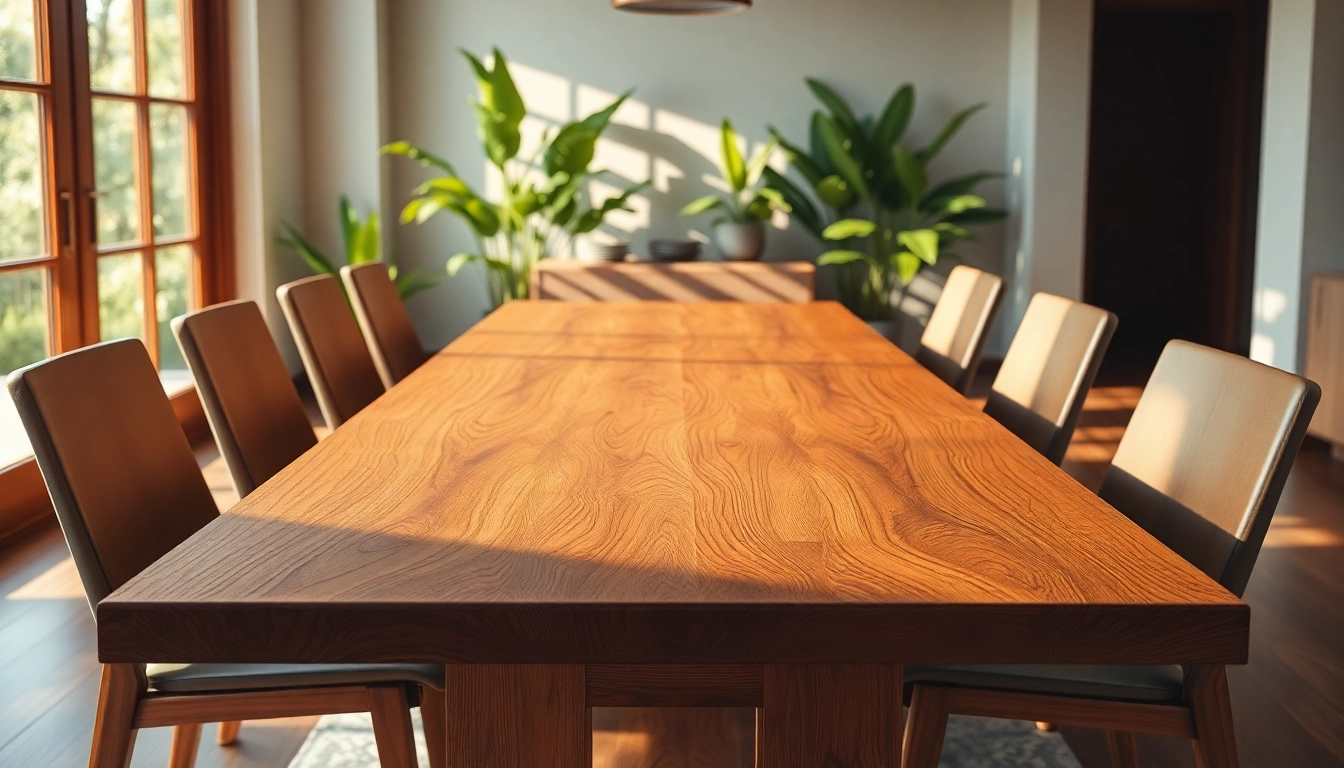
Introduction to Solid Wood Tables
When it comes to furnishing a home, few pieces can capture attention and evoke warmth quite like Solid wood tables. These timeless pieces serve as gathering spots, workspaces, and statements of style. Their rich textures and natural beauty resonate with both tradition and modernity, making them versatile additions to any space. However, solid wood tables are more than just distinctive centers for conversation; they embody quality, craftsmanship, and a connection to nature that mass-produced tables often lack.
What Makes Solid Wood Tables Unique?
Solid wood tables are distinct in various ways that contribute to their popularity:
- Material Quality: Unlike tables constructed from particleboard or veneers, solid wood tables are made from whole pieces of wood. This results in unparalleled strength and durability, allowing them to withstand the rigors of daily use.
- Unique Aesthetics: No two solid wood tables are alike. The natural grains, knots, and color variations provide a unique character that enhances any decor scheme. Over time, these tables develop a rich patina that adds to their charm.
- Lasting Value: Solid wood is a sustainable material, often sourced from responsibly managed forests. An investment in a solid wood table is an investment in longevity and sustainability.
- Customizability: Many artisans offer customization options, allowing buyers to select the type of wood, finish, and dimensions that best suit their needs. This personal touch ensures the piece fits perfectly into the home.
Choosing the Right Type of Wood
When selecting a solid wood table, the type of wood significantly influences its performance, aesthetics, and price:
- Oak: Renowned for its strength and prominent grain patterns, oak is a popular choice for traditional settings.
- Maple: This wood is known for its durability and smooth surface, making it ideal for modern, minimalist designs.
- Walnut: With rich, deep colors and striking grain, walnut tables ooze elegance and are perfect for statement pieces.
- Cherry: Cherry wood deepens in color with age, offering a beautiful transformation that many appreciate.
Ultimately, the choice of wood comes down to personal taste, desired aesthetics, and intended use.
Benefits of Investing in Solid Wood Tables
Investing in solid wood tables offers various benefits:
- Durability: Solid wood tables can last for generations when properly cared for, making them a worthwhile investment.
- Healthier Living Environment: Real wood does not emit harmful chemicals like some composite materials, contributing to a healthier indoor environment.
- Enhanced Home Value: High-quality furniture, particularly solid wood pieces, can significantly increase the resale value of a home.
- Timeless Appeal: The classic nature of wood complements almost all design styles, ensuring that it won’t go out of fashion.
Designing with Solid Wood Tables
The design versatility of solid wood tables makes them suitable for various settings—from dining rooms to home offices. Understanding how to integrate them into your existing decor enhances both functionality and beauty.
Styles and Aesthetics of Solid Wood Tables
Solid wood tables come in numerous styles, each suited to different tastes:
- Rustic: Featuring natural finishes and reclaimed wood, rustic tables add a cozy charm to any space.
- Modern: Sleek lines and minimalistic designs cater to contemporary aesthetics, incorporating woods like maple or white oak.
- Traditional: Ornate details and classic shapes define traditional tables, often made from oak or walnut.
- Industrial: Combining wood with metal accents, industrial designs create a striking contrast, perfect for urban settings.
Complementing Decor with Solid Wood Tables
When incorporating solid wood tables into your home, consider the following tips:
- Color Harmony: Choose wood tones that either match or complement existing furniture to create a cohesive look.
- Furnishing Balance: Pair solid wood tables with lighter materials, such as glass or metal, to maintain visual balance.
- Layering Textures: Mix textures by incorporating textiles, such as linen table runners or upholstered chairs, that highlight the wood’s natural beauty.
Space Planning Around Solid Wood Tables
Effective space planning is essential when integrating solid wood tables:
- Room Size: Ensure the table size fits well within the room, allowing enough space to move around comfortably.
- Activity Zones: Define specific areas for dining, working, or relaxing, and position tables accordingly to maximize functionality.
- Accessibility: Be mindful of the table’s placement concerning doors and pathways to ensure easy access.
Maintaining Solid Wood Tables
To ensure longevity and beauty, proper maintenance of solid wood tables is crucial. Regular care protects against wear and tear while enhancing appearance.
Cleaning and Caring for Your Solid Wood Table
Basic cleaning involves:
- Dusting: Use a soft, dry cloth to remove dust and debris.
- Cleaning: Wipe spills immediately with a damp cloth, but avoid excessive moisture which can damage the wood.
- Polishing: Applying a high-quality wood polish every few months can help maintain shine and protect against stains.
Preventing Damage to Solid Wood Tables
Taking proactive steps can help prevent damage:
- Placement: Avoid placing your table in direct sunlight to prevent fading.
- Coasters and Liners: Always use coasters under drinks and plates to avoid rings and scratches.
- Humidity Control: Keep humidity levels consistent to prevent wood from warping or cracking.
Refinishing Techniques for Solid Wood Tables
Over time, even high-quality tables may need refinishing. Key techniques include:
- Stripping: Remove old finishes using chemical strippers or sanding.
- Staining: Apply a stain to enhance color while ensuring it matches your existing decor.
- Sealing: Use a protective sealant to guard against future damage.
Comparing Solid Wood Tables to Other Materials
Understanding how solid wood tables stack up against alternatives helps in making informed choices regarding furniture purchases.
Solid Wood vs. Veneer: Key Differences
The main differences between solid wood and veneer tables include:
- Construction: Solid wood is made from whole wood pieces, while veneer consists of thin layers of wood glued onto a cheaper substrate.
- Durability: Solid wood typically lasts longer, while veneer can chip and peel over time.
- Cost: Solid wood tables tend to be more expensive, reflecting their quality and longevity.
Is Solid Wood More Sustainable than Alternatives?
Sustainability in furniture is a growing concern. Solid wood can often be more sustainable than particleboard and other synthetic materials, provided it comes from responsibly managed forests. Sustainable practices in sourcing ensure that trees are replaced and ecosystems are preserved, making solid wood tables an eco-friendly choice.
Durability: Solid Wood Tables vs. Particleboard
When comparing durability:
- Solid Wood: Very sturdy and can endure significant wear and tear.
- Particleboard: More susceptible to moisture damage and warping, leading to a shorter lifespan.
Purchasing Solid Wood Tables: What to Consider
Making the decision to purchase a solid wood table involves careful consideration of several factors to ensure it meets your needs.
Assessing Quality in Solid Wood Tables
To assess the quality of a solid wood table, consider:
- Wood Type: Familiarize yourself with different wood types and their characteristics.
- Joinery Techniques: Look for dovetail or mortise-and-tenon joints, which indicate superior craftsmanship.
- Finish Quality: A smooth, even finish enhances the table’s beauty and durability.
Price Ranges and Budgeting for Solid Wood Tables
Price can vary significantly based on factors like wood type, size, and craftsmanship. Generally, solid wood tables can range from several hundred to several thousand dollars. Setting a budget based on personal financial constraints and desired quality will help narrow your options.
Where to Buy Solid Wood Tables: Tips for Shoppers
When it comes to shopping for solid wood tables, consider the following tips:
- Research: Read reviews and check the reputation of sellers.
- Check Return Policies: Understand the return options in case the table does not meet expectations.
- Examine Samples: Whenever possible, visit showrooms or stores to see the table's quality firsthand.